
Our Puppies are raised on a multi-model approach
Consisting of two developmental programs (Puppy Culture & Avidog), two temperamant evaluatons (Volhard PAT & Avidog APET), and lastly a problem-solving and critical thinking evaluation (Dognition).
- Puppy Culture
Key Components of Early Neurological Stimulation (ENS): A set of gentle exercises from days 3-16 to improve stress resilience, recovery, and performance.
Socialization: Guided exposure to various sights, sounds, surfaces, and people during critical windows (like the 7-week human socialization period) to build confidence.
Problem Prevention: Protocols to teach puppies to accept handling of food/toys (anti-aggression) and positive responses to grooming and car rides.
Foundational Training: Introduces cues like "sit," "down," "come," "leave it," and crate training, focusing on making the puppy eager to learn.
Manding (Asking Politely): Teaching puppies to sit for attention instead of jumping.
- Avidog
Key components of the Avidog Program:
Early Development: Uses Early Neurological Stimulation (ENS) and scent introduction from days 3-16 to boost brain development and scenting abilities, crucial for future service or working dogs.
Nutrition & Health: Emphasizes optimal maternal nutrition (like Omega-3s) and probiotics for strong immune and brain development, plus guidance on health screening and genetics.
Temperament Evaluation: Offers the Avidog Puppy Evaluation Test (APET) to assess traits like confidence, sensitivity, and trainability, helping match puppies to suitable homes.
Training Techniques: Promotes positive reinforcement, including "manding" (polite asking for attention) and tools like the "tagline" for effective, calm leash training.
Resource Guarding Prevention: Teaches methods to prevent puppies from guarding food, toys, or people.
Education for Breeders: Provides resources for ethical breeding, puppy rearing, and creating positive early experiences for puppies.
- Early Neurological Stimulation (ENS)
Complementary puppy training methods, performed between days 3-16, that use brief, gentle stressors (ENS).
- Early Scent Introduction (ESI)
Introduces novel scents (ESI) to enhance neurological development, boosting stress resilience, scent detection, and cognitive function for better performance in adult dogs, especially in scent-based roles. ESI
- Volhard (PAT) Puppy Aptitude Test
There are 10 items that test for social attraction, following, restraint, social dominance, elevation dominance, retrieving, touch sensitivity, sound sensitivity, sight sensitivity, and stability.
- Dognition
Consists of science-based games that assess a dog’s problem-solving abilities. This helps us evaluate a dog that would be well suited for service dog work.
Vaccinations
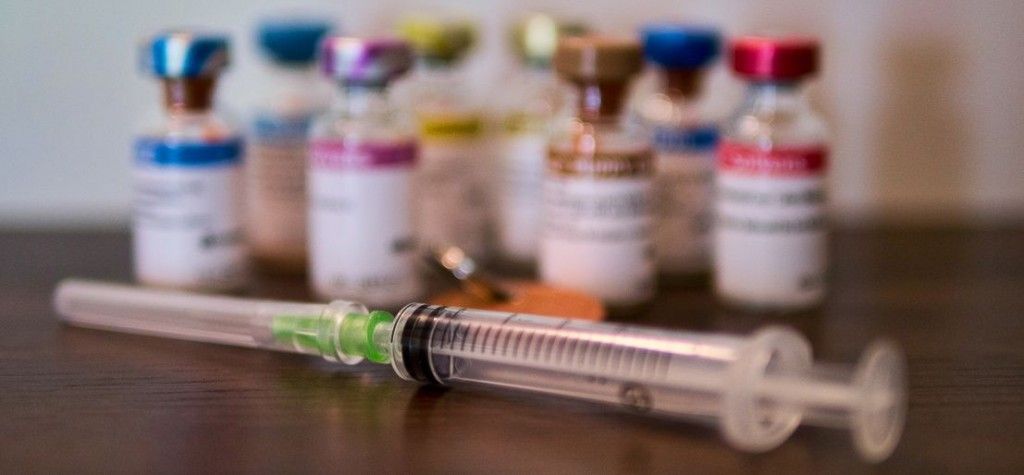
We follow a modified "Jean Dodds" Protocol. As a veterinary professional, I have seen these diseases we vaccinate for first hand. I want to set your puppy up for success with immunity to diseases they could be exposed to in their lifetime. Howard Hounds vaccinates for Distemper-Parvo, Leptospirosis, and Bordetella (Kennel Cough). Your puppy will need a Rabies vaccine at their first visit with your veterinarian along with a fecal test.
I have personally been exposed to multiple pets diagnosed with Leptospirosis, a zoonotic disease that can be transmitted to humans. There are controversial opinions within the dachshund breed community and veterinarians vaccinating a dachshund for leptospirosis is risky. The Leptospirosis vaccine became available in the USA in 2001 and a large amount of smaller breed dogs that were vaccinated had post-vaccination reactions. Years ago, Leptospirosis wasn't as prevalent in certain areas and was considered a "lifestyle" non-core/elective vaccination for pet owners. Veterinarians would discuss a risk protocol for a pet and determine based on their exposure to bodies of water and wildlife if their pet was to be considered "high risk" and should be vaccinated. In Late 2024 the American Animal Hospital Association (AAHA) updated its vaccination guidelines, changing Leptospirosis from a non-core to a core vaccination. Improvements within the last decade in the manufacturing of the vaccination have significantly decreased reactions and side effects.
We choose to begin vaccination for protection against Leptospirosis in our puppies. We do recommend continued vaccination throughout your dog's life for Leptospirosis but, if you perhaps choose not to at least your puppy will have some baseline immunity against this disease. We recommend vaccinating for Leptospirosis separately vs. in a combined vaccination along with Distemper-Parvo.
We choose to begin the Bordetella vaccination for Kennel Cough. Puppies can be at risk of catching this airborne disease during travel to their new homes. Even if you choose to not vaccinate your puppy in the future for Bordetella they will have a baseline immunity for it. The initial Bordetella vaccination we give is effective for 1 year, and protects against Bordetella Bronchiseptica only.
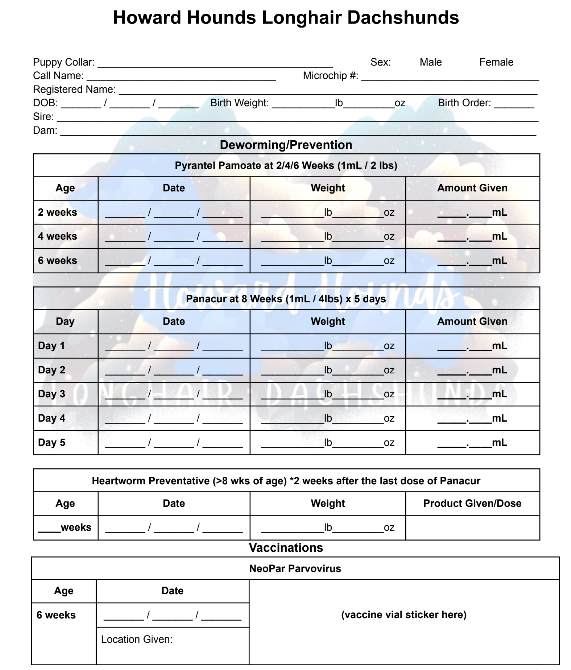
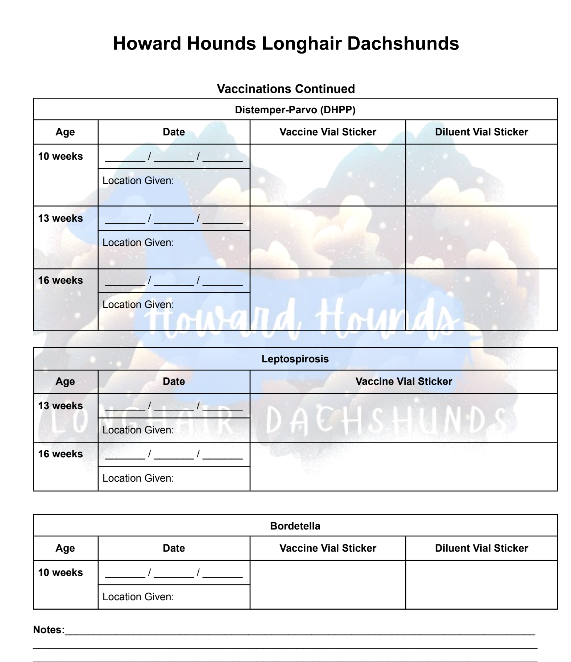
See below for an example of our vaccination/deworming protocol document below. Your puppy will recieve the following:
- A NeoPar Vaccination at 6 weeks, this is vaccinating JUST for parvo at an early age where mom's antibodies may/may not still be in effect.
- DHPP - Your puppy will receive 3 boosters before going to their new home. They will have completed their entire puppy series until the age of 1 year old.
- Bordetella - Your puppy will recieve an oral Bordetella vaccination, it is effective/valid for 1 year unless your veterinarian or boarding kennel requires it bi-annually (geographic location dependent)
- Leptospirosis - Your Puppy will have recieved their initial lepto vaccine along with the required booster. Your puppy will not then require re-vaccination until after 1 year of age.
- Rabies - Your puppy will NOT have received their rabies vaccination, and this should be the only vaccination your puppy is currently due for besides elective vaccines such as Influenza (Flu) and Lyme.
Elective Vaccinations: Influenza (Flu) and Lyme. Both require initial vaccination along with a booster in 3-4 weeks, followed annually thereafter. Depending on your puppy's lifestyle, exposure and geographic location they may recommend either or both these vaccinations.
Deworming
Our dogs are on monthly heartworm preventatives, our dams follow the deworming protocol by Dr. Greer for pregnancy/whelping. Puppies are dewormed at 2/4/6 weeks with Pyrantel Pamoate, followed by a 5-day course of Panacur at 8 weeks. Puppies will have 2 fecal samples sent to an outside laboratory for testing before they adventure to their new homes. Fecal testing at a veterinary laboratory checks for a variety of intestinal parasites & protozoa (including coccidia and giardia). Puppies begin a heartworm preventative 2 weeks after the last dose of Panacur. A document including what deworming has been given and dates is included in your puppy go-home packet.

Preventatives
Dogs should begin heartworm prevention as early as 8 weeks of age or older. Prevention should be given every 30 days, every single month year-round. Preventions can vary with additional internal parasite prevention such as roundworms, hookworms, whipworms, and tapeworms. There are a variety of products now available for pet owners to ease the simplicity of administration by combining heartworm, intestinal parasite, flea, and tick prevention into one product to be administered every 30 days. We begin heartworm prevention with our puppies before their new adventures home, and depending on the age your puppy is going home also on a flea/tick preventative.
Please visit the link below to the Companion Animal Parasite Council's website for additional information on prevention and what coverage they can provide for your pet. As a veterinary professional, I'd be happy to discuss prevention options that may best suit your puppy's lifestyle. Your puppy's veterinarian can also discuss preventions with you to determine what is available for purchase via their practice.
Heartworm Life Cycle
Watch this educational video to learn about heartworms
How Do Heartworm Preventions Work?
Watch this educational video to learn about heartworm preventions.